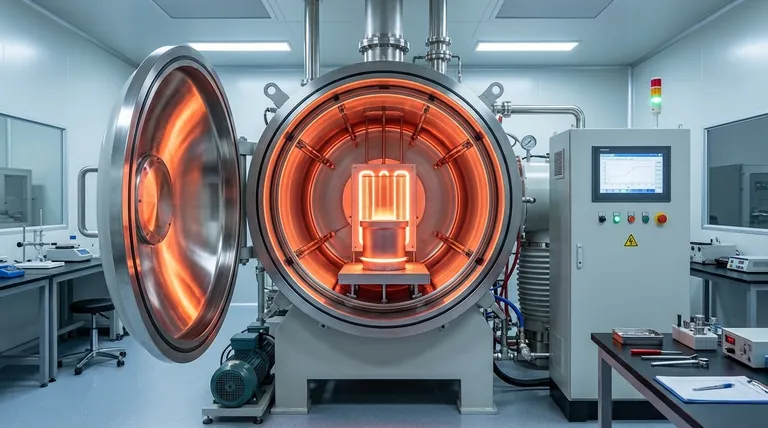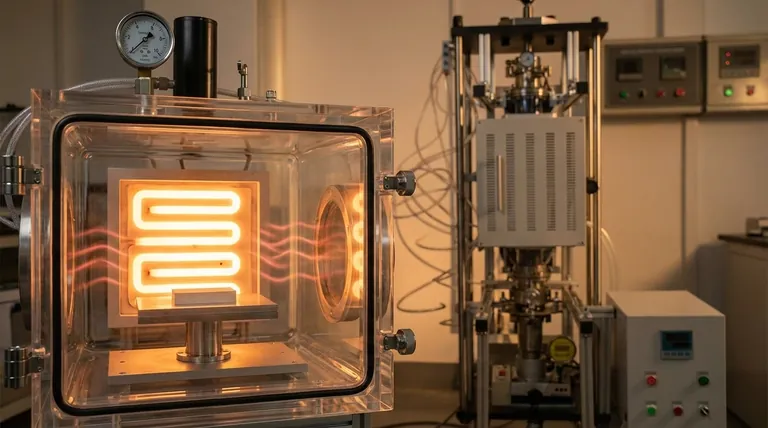
Thermal radiation is the emission of electromagnetic waves from all matter that has a temperature greater than absolute zero (0 K or -273.15°C). It represents the direct conversion of kinetic thermal energy (the random movements of atoms and molecules) into electromagnetic energy. Unlike conduction and convection, thermal radiation requires no physical medium to propagate and travels through the vacuum of space at the speed of light.
Fundamental Characteristics
Wavelength Range: It spans from roughly 0.1 μm to 100 μm, encompassing ultraviolet (UV), visible light, and infrared (IR) regions. Most objects at room temperature emit primarily invisible infrared radiation.
Cause: Kinetic interactions among matter particles cause charge acceleration and dipole oscillation among protons and electrons, producing photons.
Everyday Examples: The warmth felt from solar radiation, the glowing red embers of a campfire, and the heat given off by a standard household radiator.